
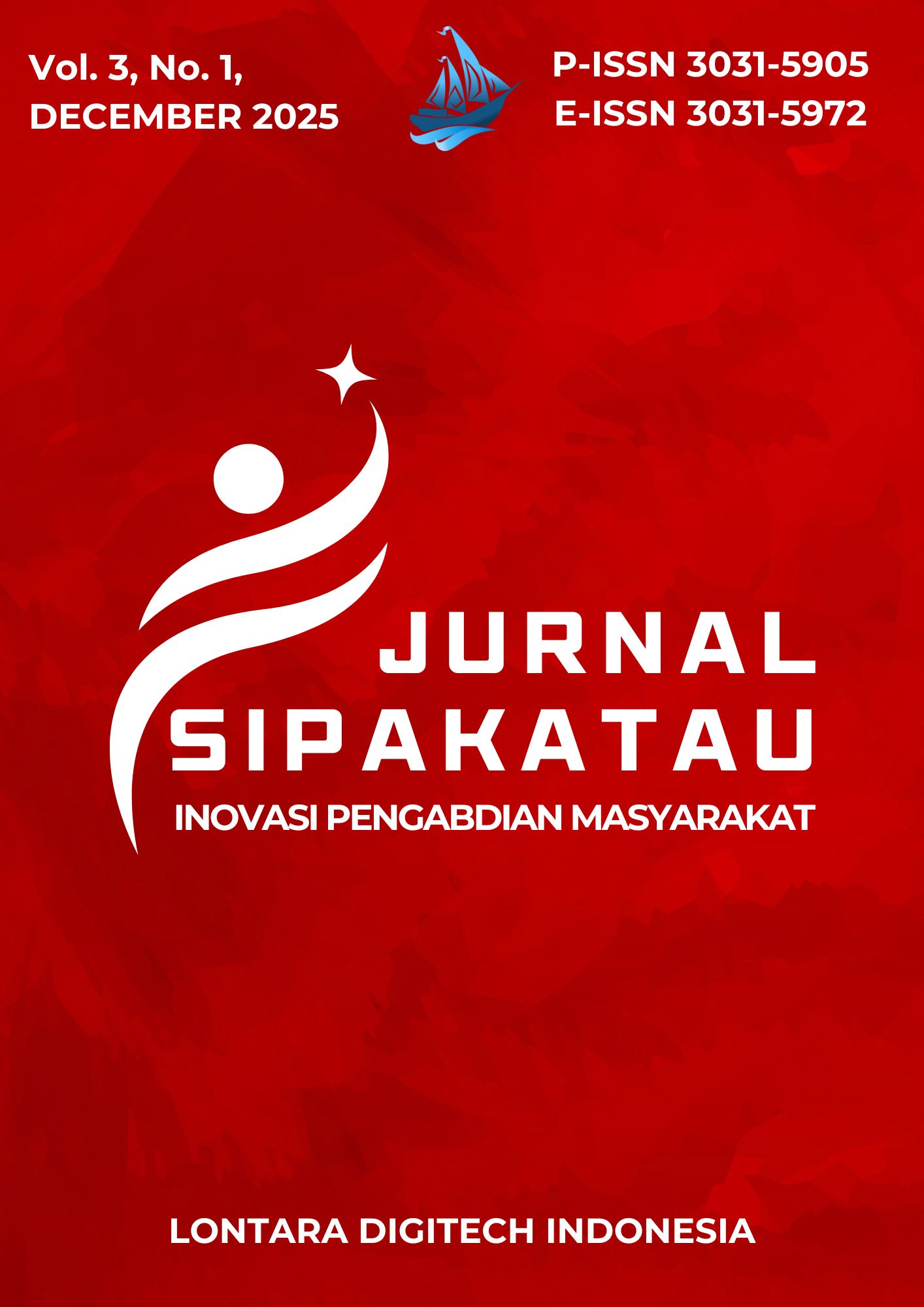
Enhancing English Language Capacity for Staff in an Environmental Education Center through a Structured Training Program
DOI:
https://doi.org/10.61220/jsipakatau.v3i1.2557Keywords:
English training, Staff empowerment , Environmental communication , Capacity building, PPLH Puntondo TakalarAbstract
English language proficiency is a strategic requirement for environmental education-based institutions such as the Puntondo Environmental Education Center (PPLH) in Takalar, South Sulawesi, which actively interacts with international tourists and researchers from around the world. The English Language Training Program for PPLH Puntondo staff is designed to improve cross-language communication skills, strengthen service professionalism, and expand the reach of environmental knowledge dissemination. This article aims to describe the implementation process, achievements, and impact of the training on participants. The program lasted for three months (July–September 2025) with 24 face-to-face sessions and a practice-based, participatory approach. Results showed significant improvements in self-confidence, speaking skills, and mastery of environmental thematic vocabulary. This program has proven effective in building staff communicative competence and provides a sustainable learning model that can be replicated by other environmental institutions.
References
Brown, H. D. (2022). Principles of Language Learning and Teaching (7th ed.). Pearson Education.
Dudley-Evans, T., & St John, M. J. (2020). Developments in English for Specific Purposes. Cambridge University Press.
Freire, P. (2020). Pedagogy of the Oppressed (50th Anniversary Ed.). Bloomsbury.
Harmer, J. (2021). The Practice of English Language Teaching. Pearson.
Knowles, M. S., Holton, E. F., & Swanson, R. A. (2020). The Adult Learner (9th ed.). Routledge.
Nunan, D. (2020). Task-Based Language Teaching. Cambridge University Press.
Richards, J. C. (2021). Approaches and Methods in Language Teaching. Cambridge University Press.
Sari, M., & Ahmad, R. (2023). Language as a Tool of Empowerment: The Role of ESP in Community Development. Journal of Language Education, 12(3), 210–225. https://doi.org/10.5430/jle.v12n3p210
Widodo, H. P. (2022). ESP and Vocational Education: Linking Classroom Learning to Real-World Practice. Asian EFL Journal, 24(2), 33–52.
Alshenqeeti, H. (2021). Revisiting Communicative Language Teaching. Language Studies Quarterly, 5(4), 67–79.
Ellis, R. (2020). Second Language Acquisition. Oxford University Press.
Krashen, S. D. (2021). The Input Hypothesis: Issues and Implications. Applied Linguistics Journal, 42(1), 15–28.
Larsen-Freeman, D. (2021). Teaching and Learning Grammar. Routledge.
Thomas, E. (2022). Environmental Communication and Global Literacy. Sustainability Education Review, 14(2), 89–104.
Wahyuni, S., & Mulyadi, T. (2024). Empowering Local Educators through English Training. Journal of Community Engagement and Education, 5(1), 1–12. https://doi.org/10.1234/jcee.v5i1.118
Zhang, Y. (2020). Confidence and Performance in Language Learning. ELT Research Journal, 9(2), 95–108.
Cahyani, L. (2023). Pengembangan Kompetensi Bahasa Inggris Kontekstual bagi Tenaga Pendidik. Jurnal Pendidikan Bahasa, 8(4), 322–340.
Hasanah, U. (2022). Pemberdayaan Komunitas Melalui Pelatihan Bahasa Inggris Fungsional. Jurnal Pengabdian Masyarakat Nusantara, 3(2), 115–130.
Yuliani, D., & Setiawan, B. (2024). Strengthening English Communication in Environmental Institutions. Journal of Applied Linguistics and Education, 11(1), 77–92.
Purwanto, M. B., Yusri, & Agustinasari, E. (2024). Overcoming barriers in English learning for the hospitality and tourism industry: Effective strategies for success. Journal of English Teaching and Linguistics, 1(2), 68–77.
Ridayani, R., & Purwanto, M. B. (2024). Enhancing speaking skills through role play and multimedia technology. Refleksi: Jurnal Penelitian Tindakan, 2(2), 33–43. https://doi.org/10.37985/refleksi.v2i2.413
Downloads
Published
Issue
Section
License
Copyright (c) 2025 Nurwahida Nurwahida, Thamrin Tahir, Muhammad Ilyas Thamrin Tahir, Rahmiati Rahmiati, Mursidin Yusuf (Author)

This work is licensed under a Creative Commons Attribution-ShareAlike 4.0 International License.






 Email: sipakatau@lontaradigitech.com
